When a Missing Croissant Turns Into an Official Warning: A Wizz Air Passenger’s Experience
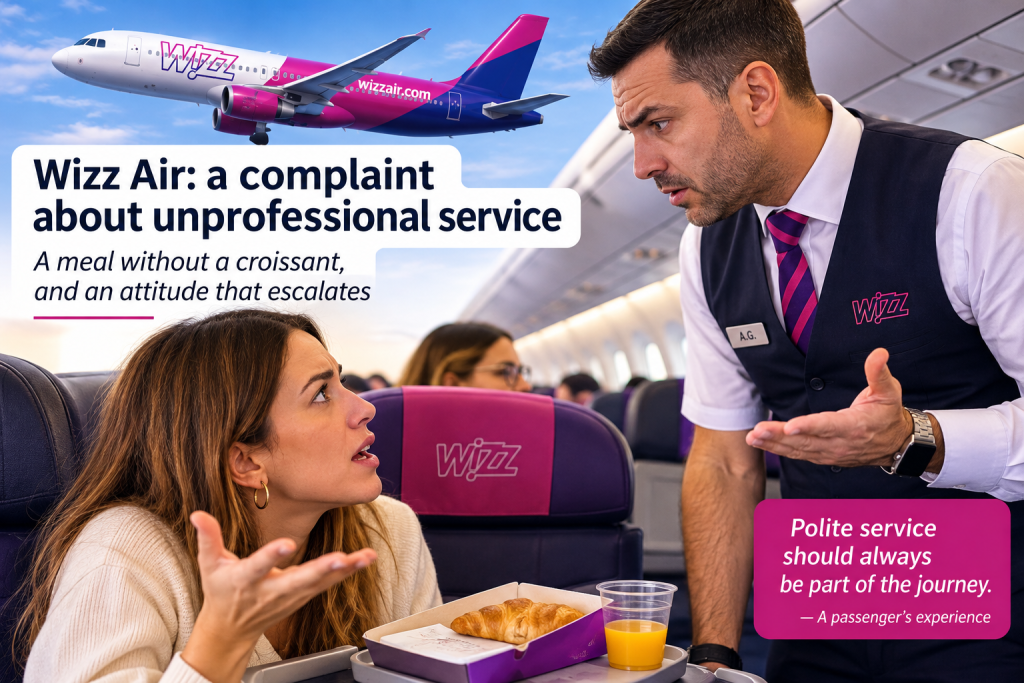
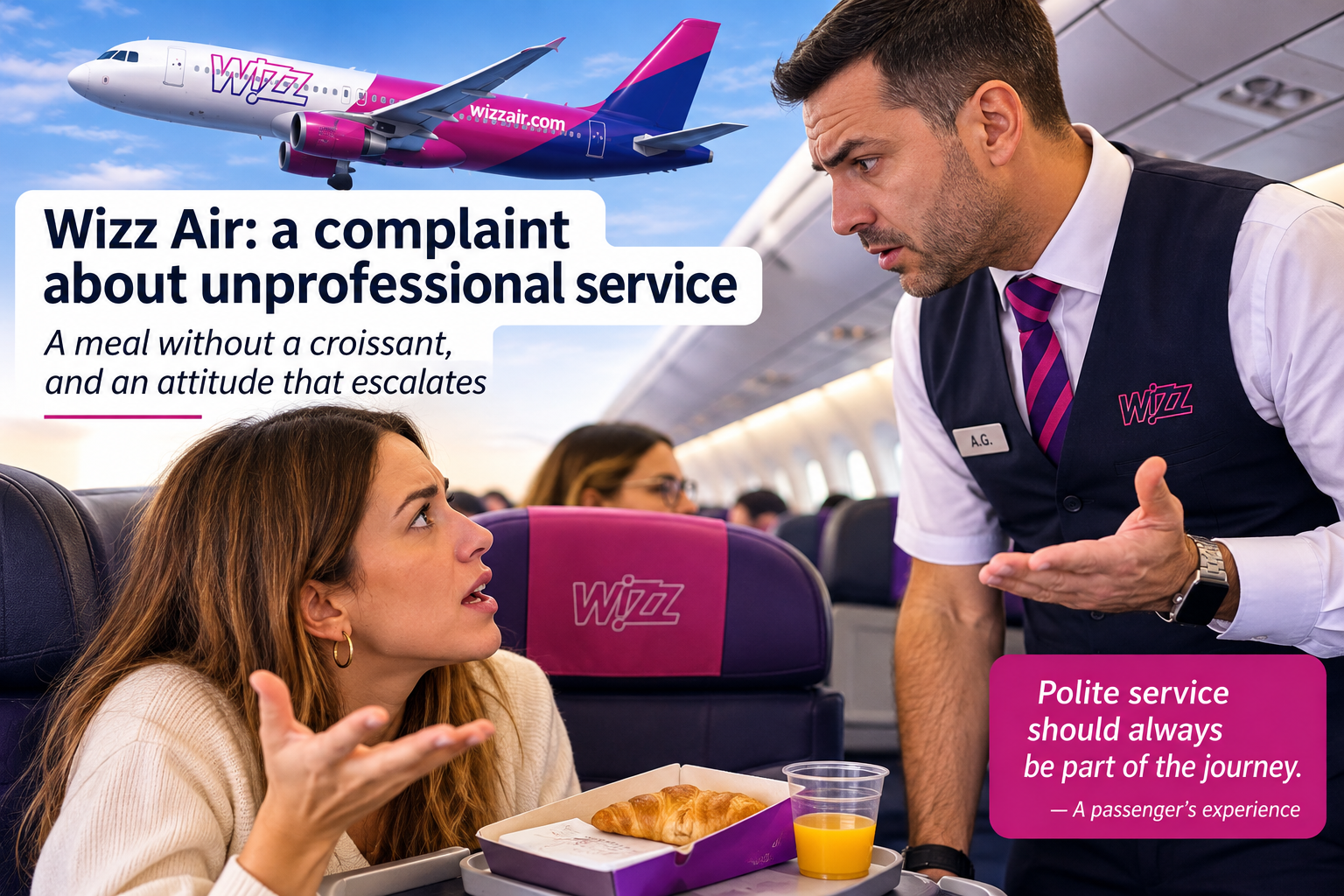
An ordinary in-flight meal order, an uncomfortable exchange with a crew member and a formal warning raise questions about professionalism, mutual respect and how conflicts are handled at 30,000 feet.
A Small Mistake That Should Have Remained Simple
The incident began with an ordinary onboard purchase. A passenger ordered a meal that included a croissant, but the croissant was missing when the food arrived. Such mistakes happen, particularly when cabin crew members are serving numerous passengers under time pressure. A simple clarification would normally have resolved the matter. The passenger politely asked whether the missing item was included in the amount paid. According to the passenger, a male crew member, identified here by the initials A.G., responded sharply: “Which croissant!?” The employee had handled the payment but had not originally served the meal.
When Attitude Becomes the Problem
The passenger attempted to explain the situation again. According to the account, the crew member rolled his eyes and replied, “Wait, I am caring about something else.” The passenger describes the response as dismissive and says the attitude was repeated twice. By the third exchange, the passenger, frustrated by what he perceived as repeated disrespect, responded in an irritated manner. That reaction also contributed to an escalation that could have been avoided. Passengers have a responsibility to remain respectful, and frustration does not excuse abusive behaviour. Equally, cabin crew are expected to handle ordinary service questions professionally. The passenger says neither party shouted and that the disagreement eventually calmed down.
An Official Warning, but What About Accountability?
Despite the situation having ended, the passenger says he received an official warning. From his perspective, this created an imbalance: his response was formally addressed while the crew member’s alleged conduct appeared to go unchallenged. It is not known whether Wizz Air conducted an internal review or what information informed the warning. Cabin crew have an essential responsibility to maintain safety and enforce procedures. Their authority must be respected. But professionalism also calls for patience, courtesy and the ability to de-escalate minor disagreements. A passenger asking about an item already paid for should be able to expect a clear and courteous answer.
Respect Must Work Both Ways
This account is not a criticism of every Wizz Air employee. Many aviation professionals work under demanding conditions and provide excellent service. Nor does a single passenger’s account establish every detail of what occurred. The crew member and the airline may have a different perspective, which should be considered. Nevertheless, the episode raises a broader customer-service question: should an airline assess only a passenger’s eventual reaction, or the full sequence of interactions that preceded it? Authority and accountability need not be opposites.
A Small Croissant, a Bigger Question
Ultimately, the complaint was never really about a croissant. It concerned how a simple request was handled, how an avoidable disagreement developed and whether the response was proportionate. The constructive approach would be to examine the entire exchange, including both the passenger’s reaction and the crew member’s conduct, rather than either in isolation. Good customer service is measured not only when everything goes smoothly, but also by how professionals respond when something goes wrong.
Editorial note: This article is based on a passenger’s first-hand account. The allegations concerning the crew member have not been independently verified. Wizz Air’s response has not yet been obtained.